
What "Source File Not Found" means
The source file not found vigembus message usually means Windows Installer cannot reach the package it cached or the original folder used for an earlier install. It is a package-source problem, not proof that a new driver file is missing from System32. The useful input is the path in the dialog: note the filename, drive, and whether the path points to a removable disk, a deleted download, or another PC.
For the source file not found vigembus case, do not browse random driver sites or download vigembus.sys. The supported repair boundary is to restore the exact setup source when it is trustworthy, use Windows Apps and Features to remove the stale product, reboot, and run the final official GitHub setup. Microsoft labels an unavailable installation source as ERROR_INSTALL_SOURCE_ABSENT (1612); an inaccessible package can also surface as ERROR_INSTALL_PACKAGE_OPEN_FAILED (1619).
| What you see | Most likely boundary | First check |
|---|---|---|
| No ViGEmBus product in Installed apps | The setup never completed or was removed | Run the official EXE, then reboot |
| No Nefarius bus in Device Manager | The device package is absent, disabled or blocked | Show Devices by connection and inspect System devices |
| A yellow warning icon | Windows has a device or signing problem | Record the error code before removing the entry |
| Two or more bus entries | Old, bundled or partial copies are competing | Uninstall normally, reboot and clean duplicates |
| One healthy bus but the app fails | Client profile, service or output mode is wrong | Restart the app and check its virtual-output setting |
Read the requested source path
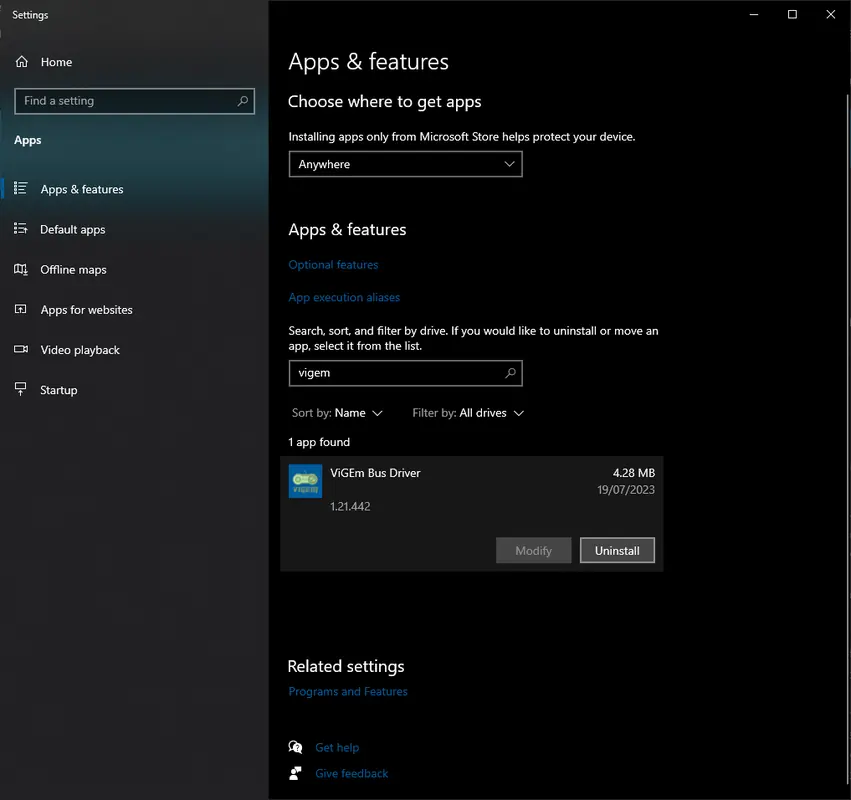
Start with Windows' normal product list so you know whether an installer actually registered. Open Settings → Apps → Installed apps, or press Win + R and run appwiz.cpl for the classic list. Search for “Nefarius Virtual Gamepad Emulation Bus Driver”, “ViGEm Bus Driver” or an entry containing “Virtual Gamepad Emulation Bus”. Names can vary between older releases and bundled installers.
If the entry exists, note its publisher and whether Windows offers Modify, Repair or Uninstall. Leave unrelated Nefarius components such as HidHide alone. If the entry is absent but the missing ViGEmBus driver state remains, continue with Device Manager because a stale client setting or bundled copy can outlive the product entry.
- 1
Close controller software
Exit DS4Windows, BetterJoy, Sunshine, Apollo and other mappers from the notification area as well as their visible windows.
- 2
Open Installed apps
Search for the Nefarius or Virtual Gamepad Emulation Bus product and record whether it can be repaired or removed.
- 3
Keep the evidence
Write down any publisher, version, error dialog or uninstall failure before changing the driver.
- 4
Do not mix components
Leave HidHide and other Nefarius drivers alone unless the affected app documents a separate conflict.
Separate the package problem from the device state
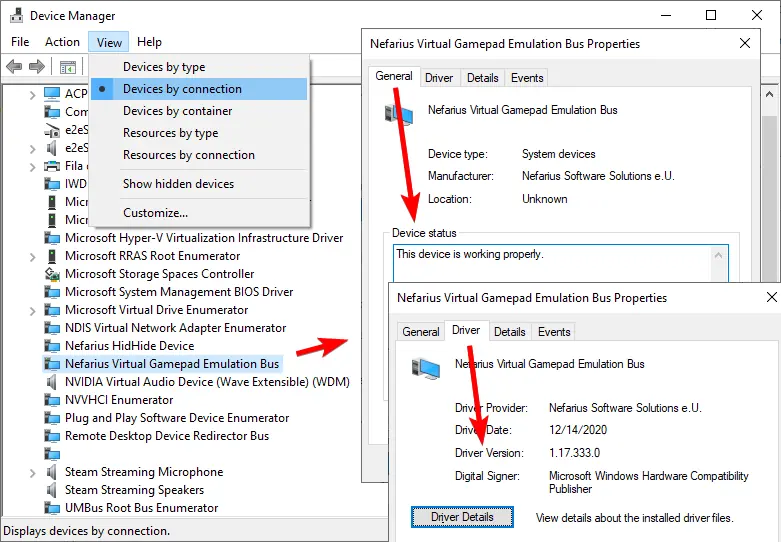
Press Win + X and open Device Manager. Choose View → Devices by connection so Windows shows the bus in the device tree. Look for “Nefarius Virtual Gamepad Emulation Bus” or the older “Virtual Gamepad Emulation Bus” wording. One Nefarius entry is the useful target; a missing entry, warning icon or duplicate entries each need a different next step.
Right-click the entry and open Properties. On the General tab, a healthy device should report that it is working properly; the Driver tab should identify Nefarius as the provider. Capture a Windows error code before uninstalling a warning-marked device. If no entry appears, refresh the hardware view and reboot once before assuming the installer is corrupt.
| Device Manager result | Action |
|---|---|
| One entry, status working properly | Restart the client app and test virtual output |
| One entry with a warning | Record the code, uninstall the device and reinstall the verified setup |
| Two or more entries | Remove the product normally, reboot, then clean remaining duplicates |
| No entry | Reboot, run the official setup as administrator and check the installer result |
| Unknown provider or unsigned file | Stop and redownload from the official GitHub release |
Repair and reinstall ViGEmBus safely
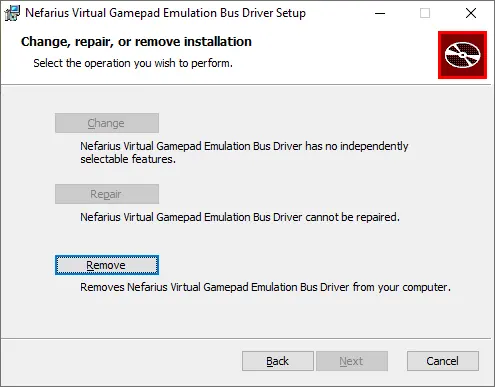
Use the least invasive repair first. Close DS4Windows, BetterJoy, Sunshine, Apollo and other controller clients. In Settings > Apps or Programs and Features, remove Nefarius Virtual Gamepad Emulation Bus Driver. Restart Windows before opening the installer again.
The public final release is v1.22.0, published November 2, 2023. Its notes say the updater was removed and an in-place upgrade may need the setup to run twice. Use the verified asset ViGEmBus_1.22.0_x64_x86_arm64.exe from the official GitHub release, then restart and verify one healthy bus.
- 1
Uninstall the product
Use Installed apps or Programs and Features to remove the Nefarius Virtual Gamepad Emulation Bus Driver.
- 2
Restart Windows
Let Windows release old driver handles before you inspect the device tree again.
- 3
Remove a remaining device
In Device Manager, remove only leftover ViGEmBus entries and select the driver-removal option when Windows offers it.
- 4
Download the verified EXE
Use the v1.22.0 GitHub asset, not a driver-pack mirror or a loose vigembus.sys download.
- 5
Run setup and reboot
Approve the administrator prompt, finish the normal setup and restart Windows. Repeat setup once when upgrading an older copy.
- 6
Verify before opening the app
Confirm one healthy Nefarius bus in Device Manager, then reopen the controller application and test its virtual output.
When the source prompt returns
If the source-file prompt appears again, do not keep feeding it unrelated MSI files. Check whether the dialog names a previous architecture-specific package, a removable drive, or a stale cache. Cancel, remove the registered product normally, reboot and start the official setup from a stable local folder.
When the bus is healthy but DS4Windows or another client still reports a problem, the remaining issue is usually the client's output profile or service. Test one client at a time; do not repeat driver removal without new evidence.
| Healthy bus, failing app | Next diagnostic |
|---|---|
| The app was open during repair | Exit it fully, reboot Windows and start it after verification |
| Virtual output is disabled | Enable the app's Xbox or DualShock output profile |
| A host service uses old state | Restart the service after the bus is healthy |
| Another mapper is running | Close competing remapping tools and test one client |
| The app has changed backends | Follow its current documentation; do not assume ViGEmBus is still required |
Shortcuts that make the problem worse
HP Omen systems are a documented special case. Some models shipped with an old modified ViGEmBus fork, and a client can detect that copy instead of the Nefarius package. If the provider or device name remains unexpected after a normal clean reinstall, use the HP Omen guidance linked from the official Nefarius documentation rather than stacking more installers.
Bundled controller tools can install their own copy silently. If a duplicate returns, inspect the application's installer or repair settings. Windows Server 2022 is outside the final setup's documented Windows 10 and Windows 11 target, and archived MSI names are not a reason to use a third-party mirror.
Avoid generic driver sites, unsigned SYS downloads, registry-cleaner commands and broad signature-enforcement changes. These shortcuts remove the source trail and can affect unrelated hardware. Start with the official product uninstall, a reboot, Device Manager and the verified GitHub setup.
Final verification checklist
Before reopening the controller app, confirm the repair in three places: the official setup completed, Device Manager has one Nefarius Virtual Gamepad Emulation Bus with a working status, and the client can create its intended virtual output. This three-part check prevents a healthy Windows driver from being mistaken for a healthy app profile.
Keep the v1.22.0 installer as a known-source repair copy. If the missing ViGEmBus driver is no longer needed, use the normal uninstall path; dependent apps lose virtual output, but the physical controller remains.
ViGEmBus source file error FAQ
What does "source file not found" mean for ViGEmBus?
The source file not found vigembus message means Windows Installer cannot reach the package source recorded for an earlier install. The path may point to a disconnected drive, deleted download or stale cache; it does not mean you should download a loose SYS file.
Can I browse to any ViGEmBus MSI?
No. Browse only to the exact package you can verify as the official release or the original trusted installer. If the requested file is unknown, cancel the repair and use the official GitHub setup instead.
What if Apps and Features will not uninstall ViGEmBus?
Close controller clients, reboot, and run the official setup. The Nefarius guide documents using the setup's remove option when the normal product entry is missing or unusable.
Should I download vigembus.sys separately?
No. A loose SYS or INF file skips package registration, source verification and normal rollback. Use the signed release installer from the Nefarius GitHub repository.
Why might I need to run setup twice?
The v1.22.0 release notes say some in-place upgrades do not complete in one pass. After the first run and a reboot, run the same verified setup again only if the package remains registered incorrectly.
Official sources used
Product and safety facts on this page are checked against first-party material. External sources open in a new tab.
- Nefarius install and troubleshooting guide — Device Manager health checks, removal, duplicate entries and special cases
- ViGEmBus v1.22.0 release — final setup asset, archived status, unchanged driver version and two-run upgrade note
- Official ViGEmBus repository — project source and production-signed release context
- Microsoft Windows Installer error codes — Definitions for unavailable installation sources (1612) and packages that cannot be opened (1619).